

Central Animal House Facility
Overview
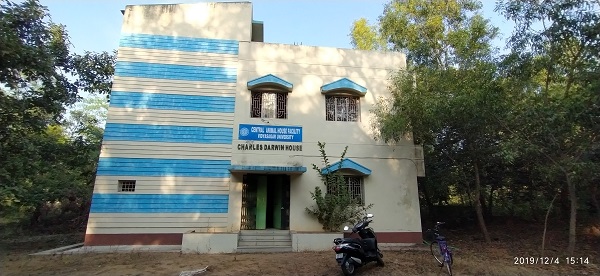
Vidyasagar University, a teaching and research institution performing research activities on animals, has established a well-maintained state-of-the-art Central Animal House Facility (CAHF) in Charles Darwin House. It is registered under the Committee for the Purpose of Control and Supervision of Experiments on Animals (CPCSEA), Ministry of Environment and Forests, Govt. of India with registration number: 2013/GO/Re/S/18/CPCSEA (Dated: 01/05/2018). The centre serves the requirements of animal experimentation for various investigators from different departments of the university.
Vision
Prudent use of animals in research plays a pivotal role in the development of basic research and animal lives.
Mission
To carry out basic scientific research and orient the new generation with animal studies by strictly following the guidelines of the Committee for the Purpose of Control and Supervision of Experiments on Animals (CPCSEA), Government of India. The Central Animal House Facility is an essential wing of the university for uninterrupted research in basic and clinical fields, covering human disease amelioration, drug development, drug designing, toxicity assessment, and understanding complex biological systems in human and animal physiology.
Facilities
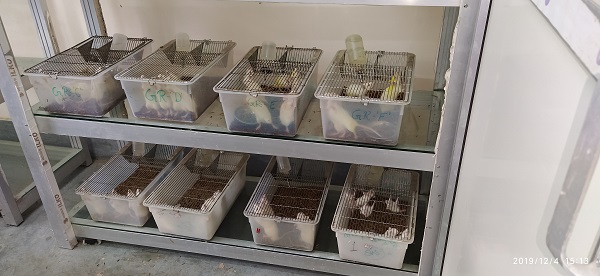
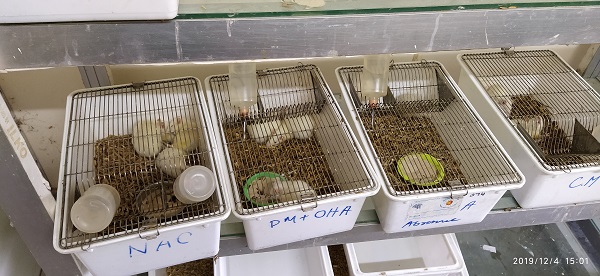
Central Animal House Facility is two storied building. There are surgical room, rat room, mice room, washing room, sterilizing room having autoclave, CO₂ gas cylinder, changing or dressing room, office, quarantine room. The surgical room is well equipped with euthanasia chamber and other facilities for animal sacrifice. There is also a store room for keeping animal feed, extra cages, and other items, and one lavatory. Air conditioners and air curtains are also available to maintain temperature and freshness of the atmosphere in the house.
Each species of animals is housed in light- and temperature- and moisture-maintained individual rooms to avoid disease transmission and inter-species conflicts. Animals are kept under controlled environmental conditions where temperature (22–26°C), relative humidity (50 ± 10%), 12:12 hr light and dark cycle, and uninterrupted power and water supply are maintained. Sterilization of cages, water bottles, and disinfection of animal rooms are performed on a regular basis. Moreover, periodical inspection takes place by IEAC experts and routine animal health checkup is performed by a registered veterinary expert.
Institutional Animals Ethics Committee (IAEC)
As per CPCSEA guidelines, the Institutional Animals Ethics Committee has been formed. It advises the institution, teachers, and researchers on facilities, practices, and improvements in animal use and care.
Members
- Main nominee of CPCSEA – Dr. Sarbani Hazra, Professor, Dept. of Veterinary Surgery & Radiology, West Bengal University of Animal and Fishery Sciences, Kolkata.
- Link nominee of CPCSEA – Dr. Sunit Kumar Mukhopadhya, West Bengal University of Animal and Fishery Sciences, Kolkata.
- Scientist from outside the institute (CPCSEA nominated) – Dr. Amit Pal, Scientist E, National Institute of Cholera and Enteric Diseases, Kolkata.
- Socially aware nominee (CPCSEA nominated) – Dr. Prasenjit Mandal.
- Chairman of the Committee – Dean of Science, Vidyasagar University, Prof. Satyajit Saha.
- Two in-house biological scientists:
- Chandradipa Ghosh, Vidyasagar University
- Bidhan Patra, Vidyasagar University
- Veterinary expert – Dr. Tapan Kumar Manna
- Secretary, Institutional Animal Ethics Committee – Prof. Debidas Ghosh, Vidyasagar University